Sleep is supposed to make you feel vibrant and refreshed, so it's frustrating to wake up with shoulder pain. Fortunately, you're not doomed to a lifetime of discomfort.
If you have shoulder pain from sleeping on your side, there are solutions. (And they don't always include sleeping on your back!)
Keep reading to learn what's causing your discomfort and how to get better sleep. We'll also help you find the best mattress and pillow for your sleeping style.

Why Do My Shoulders Hurt When I Sleep on My Side?
There are many reasons you may feel pain when you sleep on your side. According to WebMD, you might have a pre-existing condition such as...
- Osteoarthritis. A condition in which the cartilage in your shoulder wears down, leading to stiffness, pain and limited mobility.
- An injured rotator cuff. Your rotator cuff is composed of tendons and muscles surrounding your shoulder joint. When it's injured, it can cause an aching sensation in your shoulder.
- Bursitis. A condition in which the fluid-filled sacs surrounding your shoulder bones, tendons and muscles become inflamed.
Any pre-existing shoulder issue is likely to be made worse by sleeping on your side.
If you suspect you may have osteoarthritis, bursitis or another condition, give your doctor a call.
Can You Damage Your Shoulder by Sleeping on It?
Sometimes, the primary cause of your shoulder pain is sleeping on your side. (Especially if you're sleeping on the wrong mattress!)
Side sleeping can strain your rotator cuff and put too much weight on your joints, leading to inflammation, tearing and discomfort.
Thankfully, there are ways to alleviate the pain, even if you can't kick your side-sleeping habit.
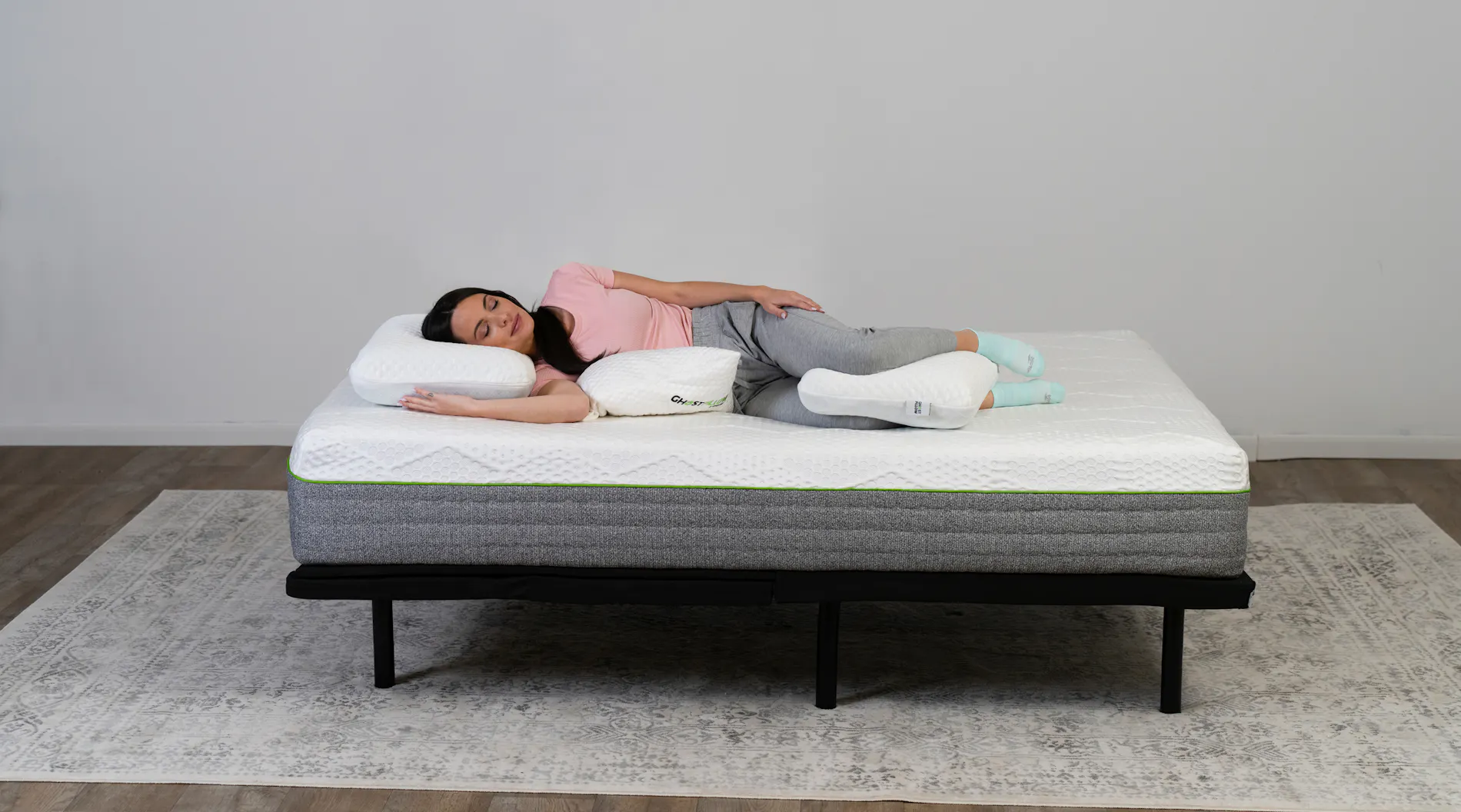
How to Sleep on Your Side Without Hurting Your Shoulder
Let's start with the obvious. If you only have pain in one shoulder, don't sleep on that side.
Instead, sleep with your injured shoulder facing the ceiling and a pillow under the armpit on your injured side. This will help to relieve pressure on your rotator cuff.
If—despite your best efforts—you find yourself sleeping on your injured shoulder, you can still find some relief.
Start by stacking one or two pillows beneath your head. Then lie on your side and place another pillow in front of your chest.
This setup will provide support for your head, neck and top arm while you doze, reducing pressure on the injured shoulder.
If you can, you might also try adding a pillow behind your back. Roll your body toward it to further reduce shoulder pressure.
Choosing the Right Pillow
If you plan to use pillows to support your shoulders while you sleep, it's important to choose the right ones. Our resident sleep expert, Greg, recommends choosing a high-profile pillow, AKA a pillow with a lot of height.